Promo

Promo

Thursday, March 31, 2016

Blast Champ Excites With New Afro-pop single Nwayor


Fast rising Afro-pop sensation, Blast Champ has released a new single Nwayor.

The new song, dropped recently and already enjoying rotation on some urban radio stations, is a fusion of Afro and Hip-hop.

Nwayor, the second single of Blast Champ, is expected to stamp the singer’s feet in the sand of time and made him compete favourably with others in the Afro-pop genre of the Nigerian music industry.

A release from Blast Champ’s PR reps stated that the singer, rapper and songwriter is working with a couple of music producers to bring out the best music to his fans.

Interestingly, like Psquare, Blast Champ also has a twin brother with him in his music sojourn. But unlike the Okoye brothers, Blast Champ sings while his twin brother produces most of his songs under the name Nedz Beats.

At the heat of the fight in the Psquare music empire, BC once said he knew the fight was not going to last because the brothers are twins.

He said he believed that the brothers will soon come to terms because they shared the same womb as twins. Just like he had predicted, the Psquare twins apologised to their fans and came back together as a group.

BC as Blast Champ is fondly called by his fans, was born Anigala Chuka on 30 May 1991 in Delta State. He always had passion for music because of the background in which he was brought up and then he discovered his talent in music at a tender age. Having graduated from the University of Benin in 2013 with a degree in Economics, BC abandoned his degree and focused on music.

BC played the flute in primary school and was a member of his secondary choir. He performed at various school events as a student of University of Benin, Edo state.

With few years in the industry, the talented act has been able to blend the Igbo flavor of highlife with the contemporary hip hop music. His first single Boo Boo Me was released in 2014 and was produced by his twin brother, Nedz Beats.

The singer and song writer is signed to Meshtro Entertainment. He is already working on a new single that will help launch him into the big league of artistes in Nigeria and Africa as a whole.


Thursday, March 24, 2016

MoneyGram Celebrates Two Decades of Growth in Nigeria


MoneyGram, a NASDAQ MGI brand, is celebrating more than 20 years of successful growth with some of the company’s key agents in Lagos.

At a ceremony held Wednesday at the InterContinental Hotel, Victoria Island, Lagos, Alex Holmes, MoneyGram’s Chief Executive Officer hosted senior executives of some of the company’s key agents including CEOs of Skye Bank, UBA and Fidelity Bank. 

"We’re grateful for your longstanding commitment to MoneyGram, and for working with us to address a serious and relevant need that has faced Nigerians, which is transferring money to loved ones across the world, quickly, securely and conveniently. Our combined efforts have enabled us to not only expand alongside our customers’ increasing needs, but also have contributed to the growth of MoneyGram,” said Holmes as he handed out milestone marker awards to each agent to honor the hard work, growth and success that has been achieved in Nigeria.

MoneyGram currently operates in Nigeria through 16 Banks of the 22 Banks on the Central Bank of Nigeria  register. This translates to over 4500 locations in Nigeria, where customers can send and receive money transfers. 

In addition and as an indicator of its focus on sub-saharanAfrica, MoneyGram is the only money transfer operator to have a regional office in Lagos. In 2015 alone, $21 billion in remittances were received in Nigeria.

The World Bank estimates that nearly $34 billion in remittances will flow into Sub-Saharan Africa in 2016. 
Nigeria is a critical part of MoneyGram’s business. 

Mo Abudu's 'Fifty' grosses record-breaking N400m

The Fifty Ladies: Iretiola Doyle, Nse Etim-Ikpe,
Omoni Oboli & Dakore Akade

As 'Fifty', the hit film by EbonyLife Films, closes its remarkable four-month cinema run in Nigeria this week, reports have it that the flick has grossed a record over ₦400m.

The much-talked about story of a pivotal week in the lives of four successful African Women in 21st century Lagos has redefined return on investment metrics in the African Film Industry. 

It is estimated that through various revenue generating streams, the film grossed such huge figures. 

The breakdown revealed that the producers of the film in partnership with Film One Distribution, maxed out nearly ₦100m through Box Office takings alone. 

Amongst the other revenue streams through which over N300m came in are premiere sponsorship/ partnerships; private screenings; a first-of-its-kind deal with internet streaming provider, Netflix; in-flight entertainment deals and Video-on-Demand (VOD).
 
Speaking on the film's cinema run, Mo Abudu,  Executive Producer of the film said they started the run in early December 2015 and four months later the film continues to resonate with moviegoers across thr country.

"We are extremely proud and it is testament that Nigerians do support their own," Abudu said.

It was gathered that the movie’s revenue intake leverages on a unique business model not previously explored in the Nigerian film industry.

"This model serves as proof to various stakeholders – producers, directors and investors – an unorthodox promotional mix combined with high quality production yields measurable results," Abudu added. 
Mo Abudu

Fifty has enjoyed rave reviews and international acclaim since it was first screened at The BFI London Film Festival 2015.

Top media outfits including BBC, CNN, Vogue, and Essence and other national online and print titles gave the film generous mentions.

The movie also enjoyed tremendous support from the Lagos State Government, Federal Government of Nigeria, Corporate and Social Nigeria.

Industry captains including Alhaji Aliko Dangote, Tony Elumelu, Herbert Wigwe amongst many attended the premiere; while music stars Banky W & Waje surprised fans with Cinema ‘Meet & Greet’ in malls across the country.

A ‘Win Big with FIFTY’ promo was run nationwide with audiences walking away with weekly prizes including Wakanow holidays, SPAR vouchers, Flat screen TVs courtesy of KONGA and more.

The Grand Prize of a Brand new Mercedes Benz B-class courtesy Skymit Motors will be presented to a winner in April 2016.

The success of the film has already spawned a television series, as the movie executives announced that they will extend the movie’s success onto the small screen.

The Season one of "Fifty: The TV Series" is set for production in fourth quarter of 2016.

Writing of the screenplay has already commenced. But details of whether the lead characters will reprise their film roles will be revealed in due course.

EbonyLife Films will also  release its second feature film title ‘The Wedding Party” in December 2016.

Tuesday, March 22, 2016

Billionaire mogul, Tony Elumelu turned 53 today


Billionaire mogul, Tony Elumelu turned 53 today. 

The mega entrepreneur and investor took to the Twitter to announce his wishes: "As I turn 53 today, I congratulate the 2016 class of Tony Elumelu Entrepreneurs! ".

Widely acknowledged as one of Africa's most influential business leaders and philanthropists.

Elumelu owns a controlling interest in Transcorp, a publicly traded Nigerian conglomerate with interests in hospitality, agriculture, oil production and power generation. 

He came into the limelight in 1997 when he led a small group of investors to take over a small, floundering commercial bank in Lagos. 

Elumelu turned it profitable within a few years and in 2005 he merged it with the United Bank for Africa. 

That banking group now has subsidiaries in 20 African countries and in the U.S and U.K. Elumelu also owns extensive real estate across Nigeria and a minority stake in mobile telecom firm MTN Nigeria, among other assets.

An economist by training, a visionary entrepreneur and a philanthropist, Elumelu is the Chairman of Heirs Holdings, the United Bank for Africa, Transcorp and founder of The Tony Elumelu Foundation.


The Beat FM, Nigeria’s Urban Radio, berths In London

londonlogovector.cdr

Nigeria’s foremost entertainment radio station, THE BEAT FM has unveiled plans to open operations in London in yet another pivotal step towards expanding the brand internationally.
The Radio station will be taking over the management of Bang Radio 103.6 in North London on 28 March under an agreement with Megalectrics, who will continue to own the station, which has been rebranded THE BEAT London 103.6 FM.
The launch of Beat FM London will take place on same day with a reveal party at Love and Liquor Lounge on Kilburn High Street in North West London as The Beat 103.6FM London simultaneously goes live.
The Beat FM London will be projecting African music, Nigerian Music, British music and Caribbean Music.
Deji Awokoya, General Manager Megalectrics, while commenting on the impending launch, said the expansion of the Beat FM brand into London came about as a result of the opportunities created by the changing demographics and entertainment consumption habits of the UK.
“This was by no means a hostile takeover, but a long-considered, calculated move because our aim is to globalize local talent. Already, Bang FM is a fixture in the Afro-Caribbean entertainment industry, with close collaborations with radio stations and media in Nigeria. It even has Nigerians in its OAP-mix,” Awokoya said.
“We did our research, and we know that currently, more people are tuning in to the “culture driven” stations. This is corroborated by an entity no less than MOBO (Music Of Black Origin). So for us, this is a strategic move and the beginning of a completely new frontier in the globalization of entertainment.”
Chris Ubosi, Megalectric boss
Since launching in 2008, Beat FM has grown organically and rapidly, with the addition of two new stations over the years. The station will be the fifth in Megalectrics’ radio division and its first on the brand’s international platform band.

Meet the 1,000 entrepreneurs selected by the Tony Elumelu Entrepreneurship Program (TEEP)

TEEP-Media-Broadcast-News
In January, there was a news of applications for the Tony Elumelu Entrepreneurship Programme (TEEP) which is designed for startups based in Africa. 
Applications closed on 1 March 2016.
There is good news as the list of the 1,ooo successful entrepreneur has been released according to a tweet from the official account of the Tony Elumelu Foundation.
According to the Tony Elumelu Foundation, 45,000 African entrepreneurs applied for this year’s edition of TEEP and only 1,000 made the final cut.
Same as last year, the TEEP 2016 list is dominated by Nigerian finalists as they take up more than half of the list. This is a good sign that Nigeria is doing something right in terms of entrepreneurial pursuits.
The list of names is a lengthy one that would not be accommodated in the post, so if you did apply for TEEP 2016 or know anybody that applied, click here  http://tonyelumelufoundation.org/teep/wpcontent/uploads/2016/03/TEEP_1000_NAMES_2016.pdf  to see a full list of the names and share with your friends that applied.

Monday, March 21, 2016

Meet the guys working to overthrow free digital music downloads in Nigeria

My Music Foounder (59 of 67)


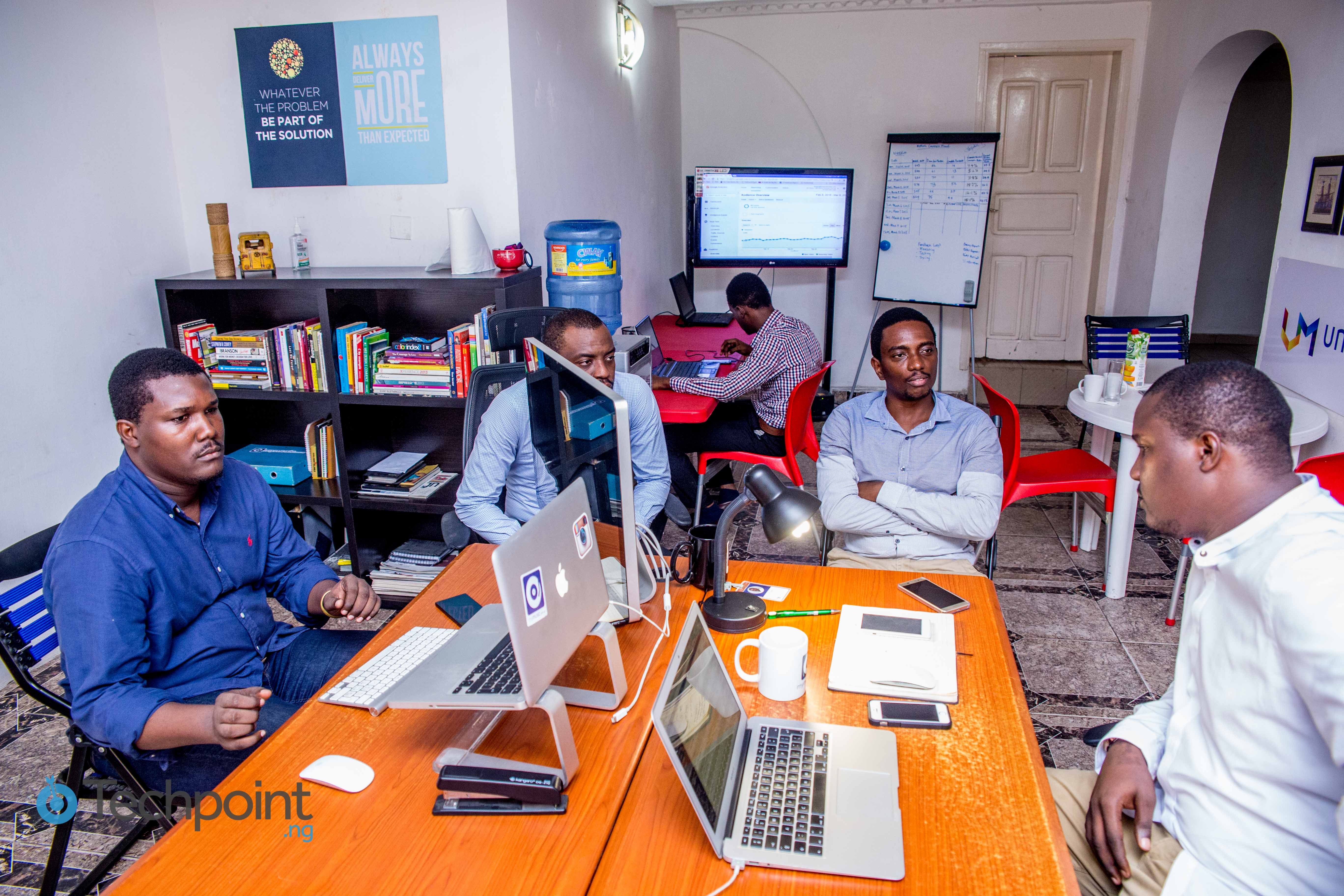
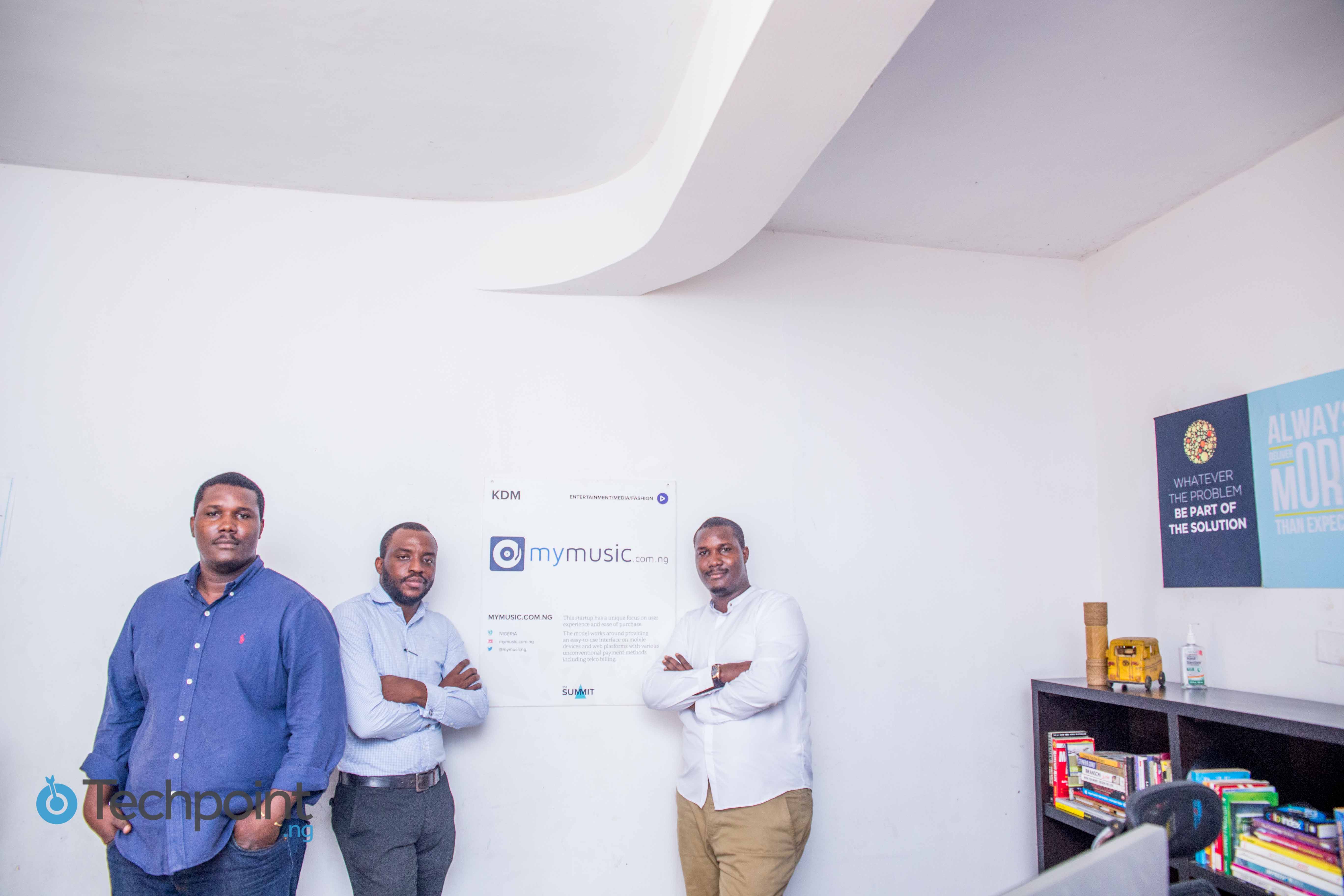
In an industry fueled by all too influential free music blogs, three young entrepreneurs are taking the bull by the horn to achieve the unimaginable.
MyMusic.com.ng is an online retail platform that lets Nigerians pay to download high quality music using a convenient payment channel they’re all familiar and very comfortable with — mobile airtime. Techpoint sat down for a chat with the 3 co-founders of MyMusic to get some insight into how they hope to end the reign of free digital music downloads in Nigeria.

Techpoint: Could you give us a brief intro of yourselves and the roles you play in MyMusic?

Damola: My name is Damola Taiwo. I am the Chief Operational Officer and Co-founder of MyMusic. Most of what I do revolves around speaking to, and sourcing, partners. I also do some tech stuff, design and branding sometimes.
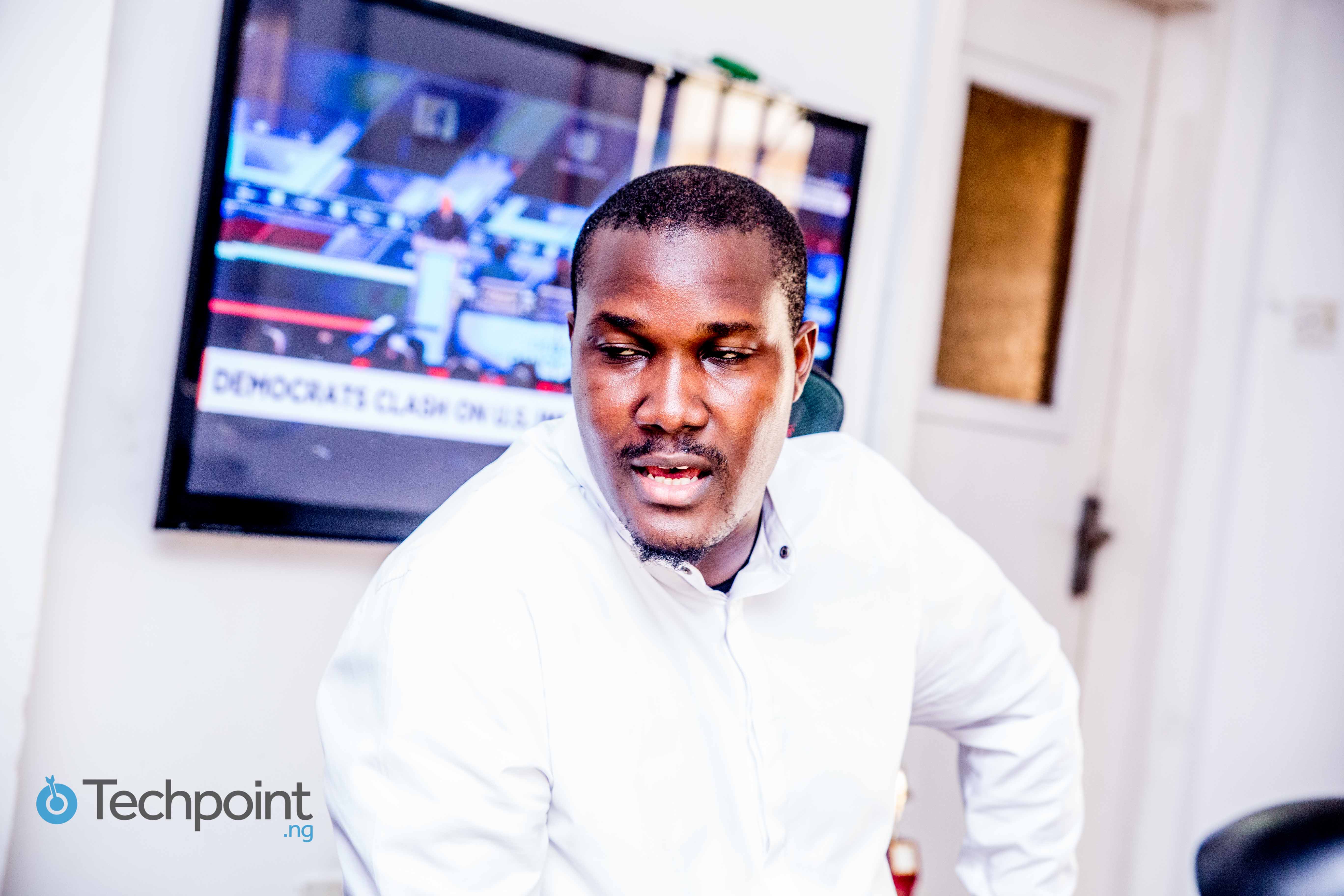
My Music Foounder (8 of 67)
Damola Taiwo
Tola: My name is Tola Ogunsola. I am the CEO and Co-founder of MyMusic. Most of what I do is liaising with partners and seeing to the day-to-day operations of the company and business development I also work with Damola on content acquisitions from record labels and independent artistes.
My Music Foounder (54 of 67)
Tola Ogunsola
Dolapo: My name is Dolapo Taiwo. I am Co-founder and also double as CTO for MyMusic. Most of my work revolves around third-party tech integrations. I also oversee a lot of development work.
My Music Foounder (35 of 67)
Dolapo Taiwo

Briefly, what is the story behind MyMusic?

Damola: We met at Babcock University where we were all studying Computer Science. While in school, we were very involved in web development and computer clubs. Tola especially was the kind of programmer everybody wanted to know when they had assignments. We also had similar interests in music. I play the bass guitar, Dolapo plays the keyboard.
My Music Foounder (66 of 67)
Two years after leaving school in 2004, we came together to nurse an idea — a music store for selling Nigerian CDs online to people abroad. But it didn’t fly so we all moved on. Dolapo and I went on to found Unotech Media, which we initially ran from our uncle’s garage in Ibadan. Years after, we reunited again to share experiences of the things we had done with technology in our personal lives. We saw how the Nigerian music industry was so fragmented and we thought we could do something about it. We decided  we would build a digital music downloads platform. That’s how it all started.

But you were entering a saturated space at a time when most local players had tried and failed. What made you so confident that this was the way to go?

Damola: When Steve Jobs started iTunes, Napsters was the P2P music sharing platform everybody was using to download free music. No one ever believed that iTunes could become such a commercial success. What that taught us is that, as long as it is convenient, people don’t mind paying for digital music downloads
My Music Foounder (7 of 67)
Granted, the tech industry in Nigeria is still very young; quite a sizeable number of consumers are yet to embrace tech. Someone in the know told me that there are no more than 200,000 Nigerians who use their debit cards online. But these are the same people who, even though they download songs for free from music blogs, will pay N50 a month for CRBTs (caller tunes). So we researched on how we can match that experience. If we could find a way to make people pay just by the click of a button, then we had a solution. The only reason why we started MyMusic was because we thought we had the solution.
But it took us 3 years to come up with that solution. Now you can press a button and the song is sent directly to your phone, N30 is deducted from your airtime and you receive an SMS receipt with a link to re-download the song if it fails.

That sounds like a lot of work. I imagine it’s been very challenging

Dolapo: It sure is a lot of work. To achieve what we are doing, there are an awful lot of third-parties involved. Because of the way the music industry is structured, getting the attention of record labels is quite difficult. Manoeuvring around 12 record labels and numerous individual artists, just to get them on one platform is a bit of a challenge. But we’ve been able to surmount most of it.
My Music Foounder (31 of 67)
Tola: It’s almost like we are a unification of 3 different industries; music, tech and communications. You could also add payments into that mix. So for a typical everyday user that lands on MyMusic, from point zero to download, it is just 2 clicks. But for us it takes us connecting to about 5 entities, which you are not aware of. Because we have to seal so many partnerships, there is a lot of friction and so many potential points of failure.
My Music Foounder (2 of 67)
What we have going for us is that even though we all have a technology background, we’ve made a conscious effort to shift the focus from the technology to what users are used to and want.

Have you raised any investments so far?

Tola: No we haven’t. When we started, we had an interesting number of people reach out to us. At that time the issue was that some of the suggestions from the prospective investors sounded like doing exactly the same thing competitors have done and failed at. Eventually, we found an investor but they tried to change too much. So we decided at that point to take a break from seeking for investors. Currently, we are bootstrapping the company to a point where we build enough traction to start talking to investors again.
My Music Foounder (40 of 67)
Damola: Just to clarify. It’s not like there is some stack of cash somewhere we can constantly pump into the business. We all have other businesses that we are running which serve as the performance engine for fueling MyMusic. I can tell you it has been extremely difficult; we are literally giving it all we have. Can you imagine what it’s like pumping all money you make into a venture that is not making any profit?

Have any of you ever got to point when you felt like throwing in the towel?

Damola: To be honest, I never thought it was going to be this difficult or take this long. However, we have gotten to a stage where we cannot go back. I think what has allowed us to stay resilient up to this point is that fact that we all have our personal things going on for us. So we are not looking at this thing as a short term venture or a major revenue stream. I mean, if you think about it, it is almost impossible to bootstrap what we are doing because it is a very expensive project. I would advise entrepreneurs out there to at least have some source of personal revenue that will help you to have a higher staying power.
My Music Foounder (49 of 67)
Tola: For me, it has never really gotten to that point of giving up outright. Interestingly, whenever it seems like we are getting close to our breaking point, something always happens — like finally sealing an important partnership we’ve been chasing for months — at the nick of time that is just about enough to keep us going. 
Dolapo: We are convinced about what we are doing so we cannot give up even though it is a painful process. I just find something to do; sleep, take a vacation, whatever I can to keep my sanity.

In your position as an intersection of both industries, what do you think the Nigerian tech industry can learn from the more successful music industry?

Damola: The other day, we had a discussion with one of the biggest artiste managers in Kenya and she made some key observations. Nigerian music videos have been able to match up to international standard. So if Jay Z uses a Ferrari in his video, you can be sure Davido will use a Porsche. Or Wizkid will use a Lamborghini. They’re also wearing the same kind of designer apparel and shooting at similarly fantastic locations. People watching these music videos like to be inspired. If you cannot inspire them, they see you as a local artist. Phyno is rapping in Igbo but people are listening to his music all over the world because people feel it’s international. The content is local but the outlook is international. A lot of it is just what is fashionable to do. But as long as it is excellently done, people will be attracted to it. A passion for excellence is very important. That’s what I see the Nigerian music industry has tapped into and that’s why it is so big.
My Music Foounder (10 of 67)
Tola: Jimmy Iovine, one of the biggest music execs in America and Co-founder of Beats with Dr Dre, said one of the things that always struck him when he had a meeting with Steve Jobs was that tech people were always over confident. On the other hand, the music industry people don’t have any confidence.
It’s the same here in Nigeria. People in the music industry are always focused on the money. They recognize that what they’re doing is a business. Tech people on the other hand are way too confident and focused on tech. It’s like they get kicks out of using the latest tools to build stuff that nobody’s going to use it, because it solves a problem that doesn’t exist. Tech people in Nigeria need to remember that fundamentally they are in a business.

Finally, based on your experiences, what pieces of advice do you have for aspiring entrepreneurs?

Damola: I see a lot of young people now who, once they finish university, believe the next thing is to sign up at some hub. Don’t venture into startups just because everyone is doing it. It took me almost 9 years to start this startup. The only reason why you should be running a startup is because you have the conviction that you can solve a problem. Not because startups are the next thing to do to make money for yourself. You can work for somebody, maybe another startup, or you can volunteer to work for a big company for free. Maybe after 6 months they can employ you. You could become bigger than someone who is into startups and doesn’t really know why he is doing it.
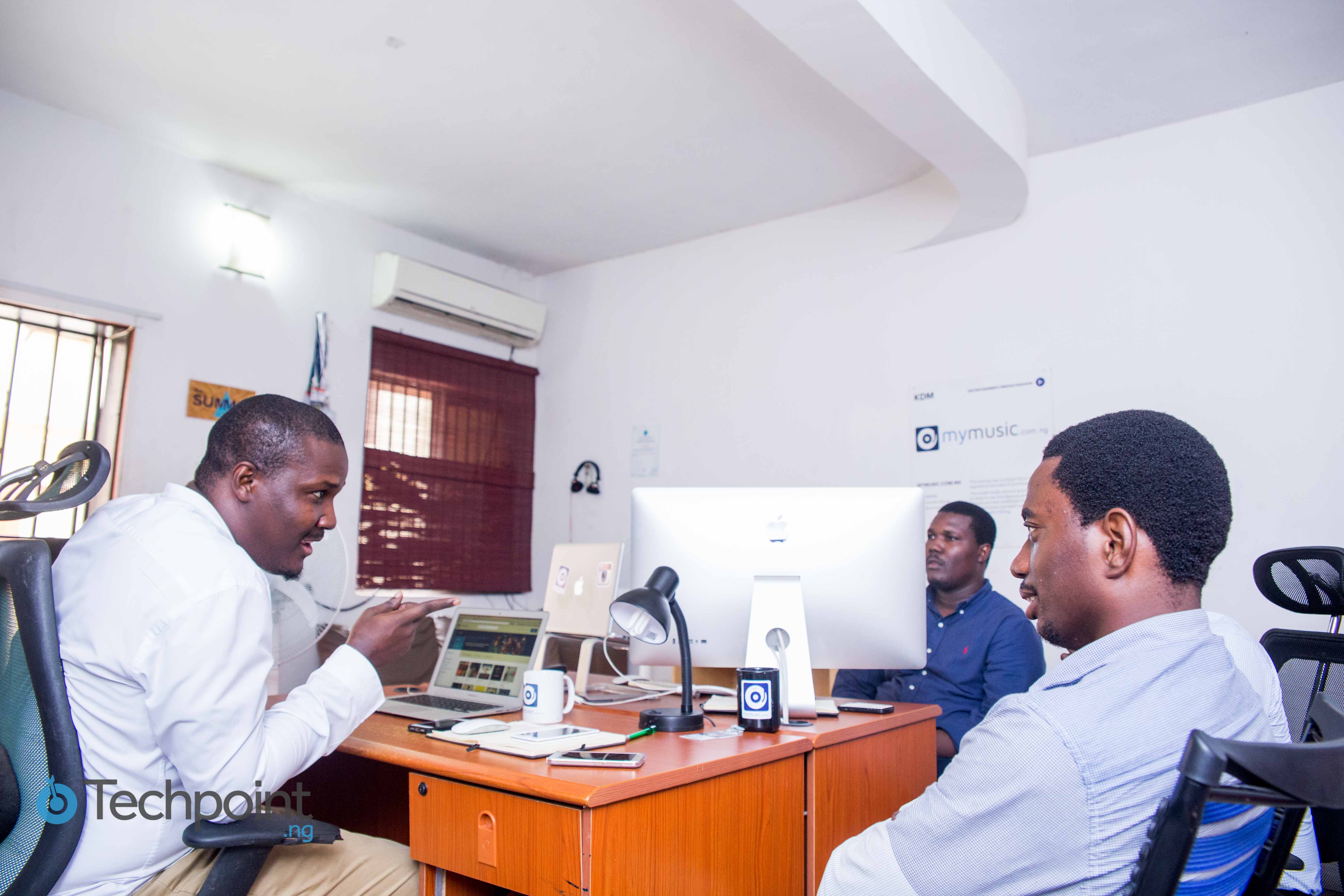
My Music Foounder (33 of 67)
And once you decide the time is right to start a venture, focus more on the product. When you have a compelling product that solves a real problem, the right forces will align; money will come, investors might come, solutions will come, partners will come. That’s if  you focus on your product and you’re solving a real problem.
Tola: I think that there’s a lot of glamour around startups and it is obviously because of success stories around the world. But people always forget that are startup is essentially a business. If you don’t have a compelling product or you’re not differentiating just don’t bother starting because, you’re going to face a lot of challenges, especially in the SSA market. Naivety is good. You’re fresh out of school, pumped up and you think you can take on the world. But your reality should always be balanced. You can’t come out with a software that will change the banking industry in Nigeria without first understanding the banking industry.
My Music Foounder (62 of 67)
Dolapo: The reason why Olamide is so successful is because he is local — street ti take over. Go local but use the resources around you to do whatever you’re doing to the highest level of professionalism. If what you are doing is not part of Nigerian realities, it’s a joke. But if it can appeal to the average man on the streets , then you know that you’re doing something right. For a second, take off your tech cap and just think like a normal human being. When you do that, you start to see that things have a different view entirely. You are no more just building stuff that is high tech. You are building stuff that people need. Because at the end of the day, nobody cares whether your code is written in PHP or C#. What people care about is what problems it solves and how can it can impact the vast majority of people out there.
This link to the original story was https://techpoint.ng/2016/03/21/mymusic-founders-interview/